
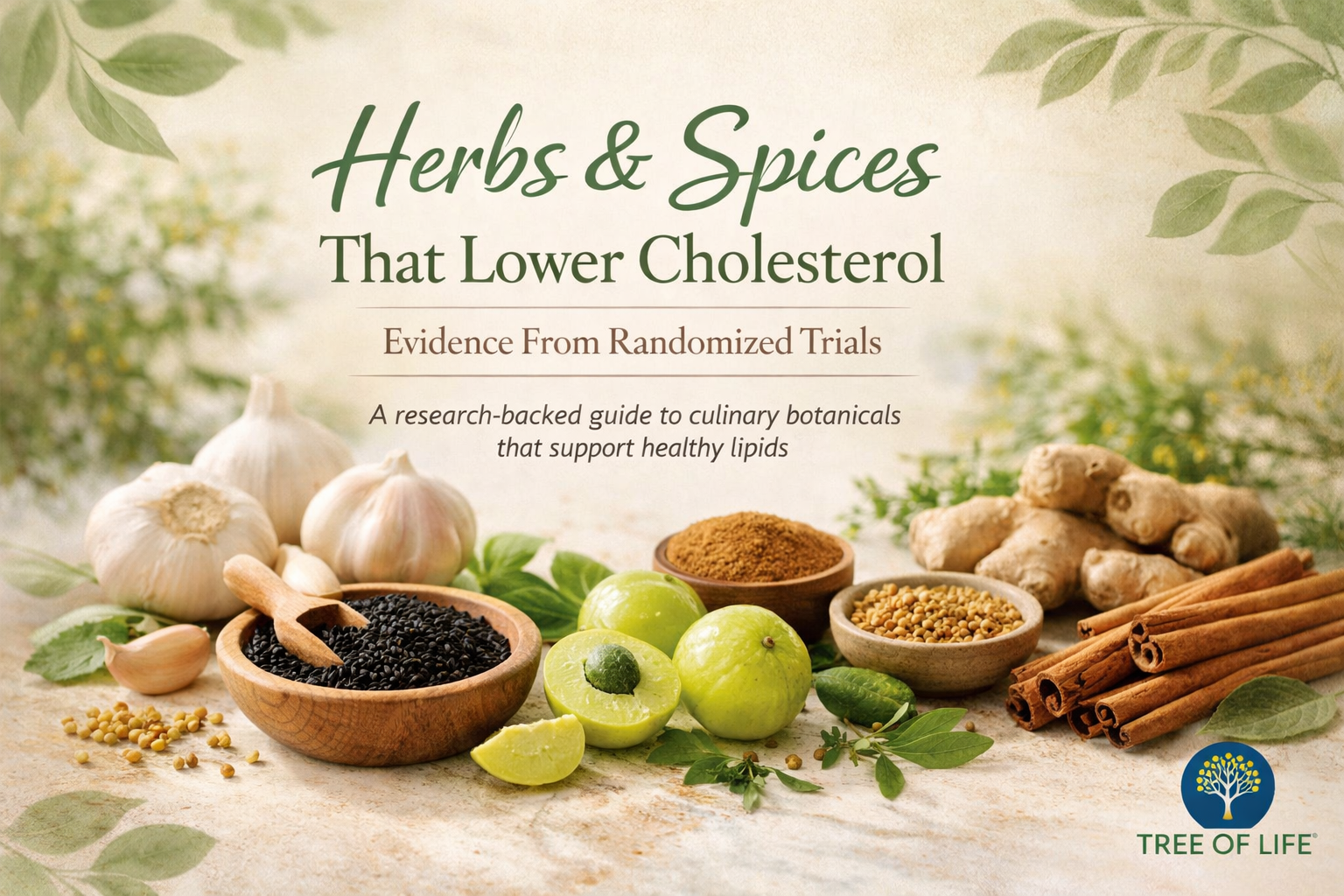
The Science of Culinary Botanicals: How Everyday Herbs Support Healthy Cholesterol
“Food is your first line of therapy — when you know how to use it.”
For decades, herbs and spices have been celebrated in traditional medicine. Today, modern research is catching up. A growing body of clinical evidence — including the recent AcadNutr (2024) review — shows that everyday botanicals can meaningfully support healthier lipid profiles.
These aren’t exotic supplements or hard‑to‑find extracts.
They’re ingredients already sitting in your kitchen.
Five Botanicals Backed by Clinical Evidence
Meta‑analyses and randomised controlled trials highlight five culinary herbs with consistent LDL‑ and total‑cholesterol‑lowering effects:
- Black cumin
- Garlic
- Fenugreek
- Amla
- Cinnamon
Each works through different mechanisms — from reducing cholesterol synthesis to improving bile acid excretion — creating a synergistic, food‑based approach to heart health.
“When tradition meets evidence, nutrition becomes powerful.”
What makes these botanicals remarkable is not just their history, but their mechanisms:
- HMG‑CoA reductase inhibition (a statin‑like effect)
- Reduced intestinal cholesterol absorption
- Increased bile acid excretion
- Enhanced LDL receptor activity
🍽️ How to Use These Herbs Daily
The real magic happens when these botanicals become part of your everyday meals:
- Sprinkle black cumin on salads or yoghurt
- Add garlic to dressings, sautés, and soups
- Stir fenugreek into curries, lentils, or warm water
- Blend amla powder into smoothies
- Mix cinnamon into oats, tea, or baked fruit
Small, consistent habits create meaningful change.
🌿 “Your kitchen is a therapeutic toolkit — use it intentionally.”
At Tree of Life, we help clients bridge the gap between research and real‑world practice.
Evidence‑based botanicals are one of the simplest, most accessible ways to support heart health naturally.


